
Lab technician opportunities

- Student Success Story
- Academic
- Community
- Workforce
Klamath Community College Lab Technician program may be the right fit
If you are struggling to find a career that fits your personality, drive, goals in life, you might want to look at becoming a lab technician with an Associates of Science certificate from Klamath Community College. It may open doors to a world you never knew existed.
Fernando Torres discovered that, and hasn’t looked back.
“I had a lot of plans in high school. Originally, I wanted to be an attorney but after I completed a job shadow, I found it wasn’t for me,” the Klamath Falls native said. “I didn’t want to do health care or anything science-related in high school, funny enough. I always said I wanted to be an FBI forensic technologist. That’s when I contacted KCC, as they just started offering the lab technician program.”
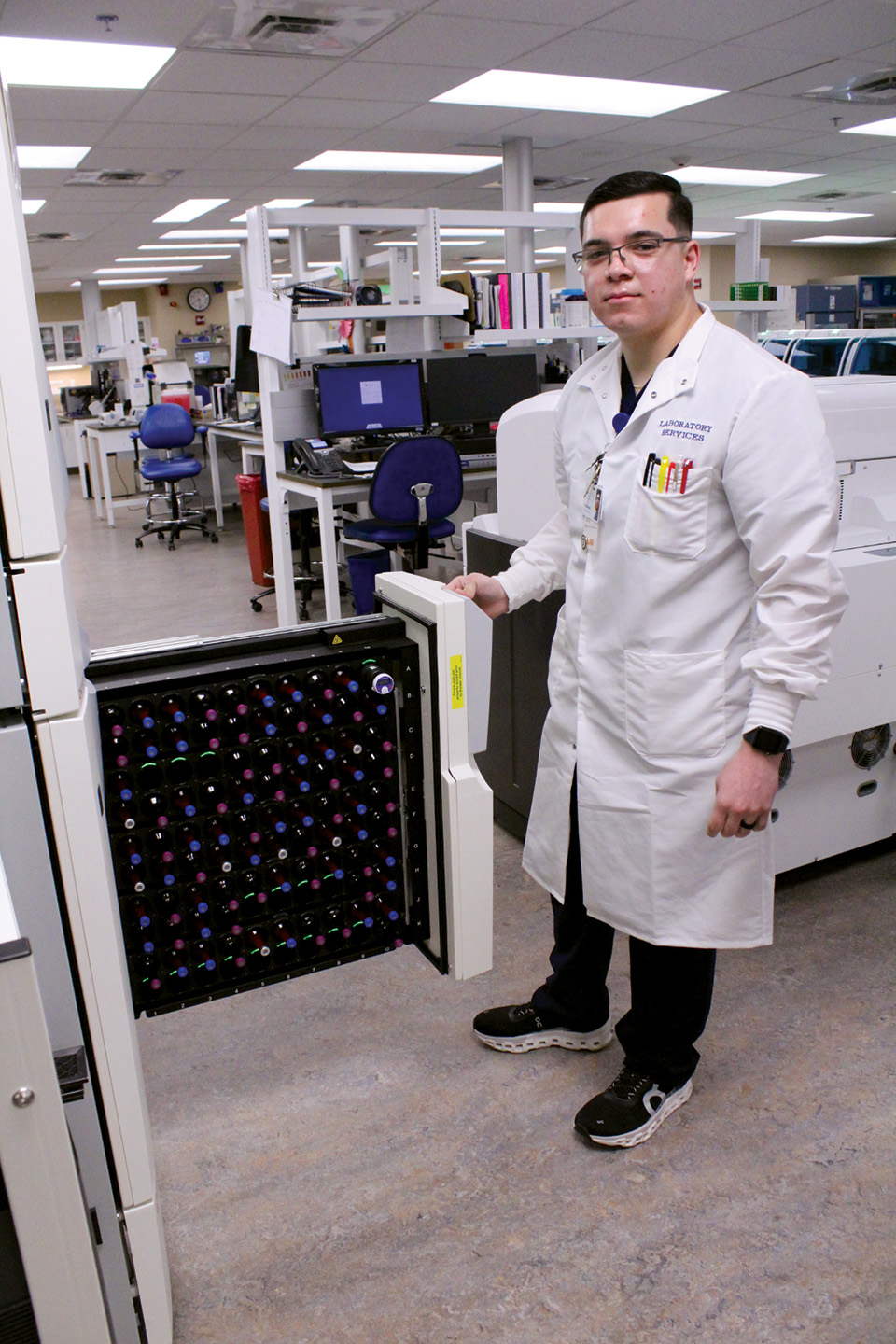
The Laboratory Technician Associate of Science degree options include jobs as a biological technician, wildlife biologist, chemical technician, forensic science. There are job opportunities at Sky Lakes Medical Center, U.S. Fish and Wildlife Service, U.S. Geological Survey, Jeld-Wen Research and Development and police forensics.
“Many kids know about forensics from the NCIS TV shows,” said Dr. Steven Hobbs, Dean of Allied-health and Sciences, who oversees the program. “But they may not know how wide-open the field of forensics really is. We have state-of-the-art lab equipment and excellent teachers here at KCC who encourage your success.”
Torres, 23, is a lab technician for Sky Lakes pathology department, which includes blood analysis and patient diagnosis techniques.
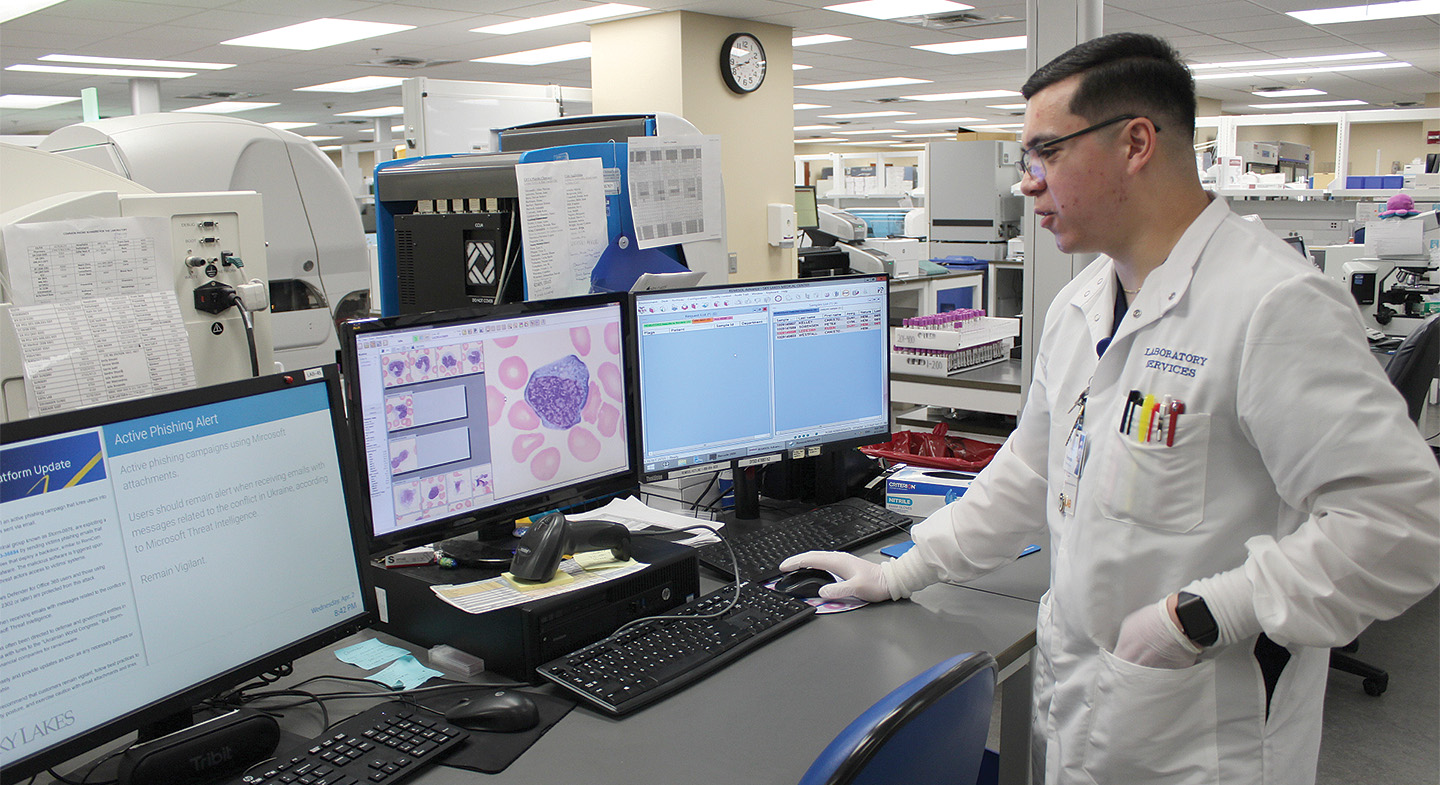
“If you’re a little bit of an introvert, this is the job for you,” he said. “I knew I wanted to help people, but I wasn’t ready to work closely with patients one on one. Here, I can help interpret lab results that ultimately helps doctors and nurses settle on treatments.”
In one instance, he worked on what is known as a “massive transfusion protocol” for a trauma patient in dire need of blood. Trauma generally means they are a car crash or stabbing or shooting victim.
“After you prepare 20 units of blood sent to the ER and you later get a call back from the doctor that the patient is stabilized and is going to make it, you have a sense of pride that you contributed to that. That is the most rewarding feeling,” Torres said.
“We had a patient who came into the ER with abdominal pain. It turned out it was Burkitt’s lymphoma, a rare, fast-growing cancer,” he said. The lab discovered the disease based on the blood cell structure. “We were able to see it, connect those dots and get them the treatment that they needed. It’s rewarding to find something like that and get them the help they need.”
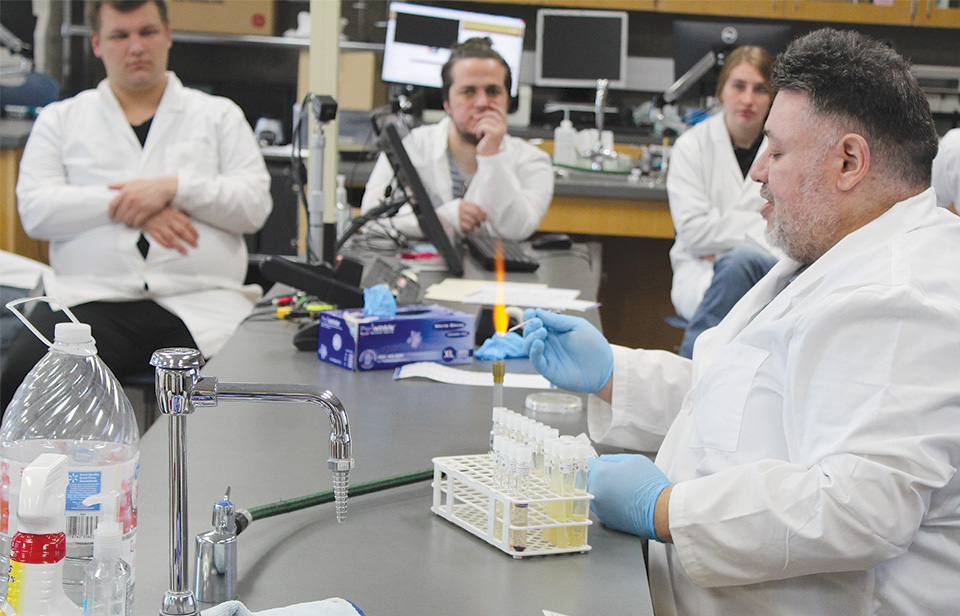
At KCC, 60% of the coursework is available online. The program qualifies for the Oregon Promise benefit, which, if you are an eligible high school graduate 90 credit hours are covered. It also qualifies for the Badger-to-Owl program, meaning you don’t lose any college credits transferring to Oregon Institute of Technology if you want to further your education.
There are also internships with local business partners. And the pay is a living wage.
Torres attended local schools and graduated from Mazama High School in 2019. While at KCC, he interned at Sky Lakes. He obtained the Associate of Science and Medical Laboratory Technician certificate and later was offered a job after completing his bachelor’s degree at Weber State University. The hospital offered a tuition reimbursement, too.
“KCC instructors Eleazar Gutierrez and Barbara Mann are both amazing chemistry professors,” Torres said. “I absolutely loved my time with them. Classes were small, very comfortable. You never worried that your questions wouldn’t get answered. They were always there for you. It was easy to get help when things were challenging.”
For more information about KCC and its programs, visit www.klamathcc.edu.
What comprises the Lab Tech degree:
The Laboratory Technician Associate of Applied Science degree is offered to Klamath Community College students seeking employment in scientific fields and laboratory environments. The degree offers options in Medical and Clinical Laboratory Technician or Biological and Biotechnology Laboratory Technician.
This program may provide prior learning credit and extended learning opportunities for persons previously or currently employed in related professions.
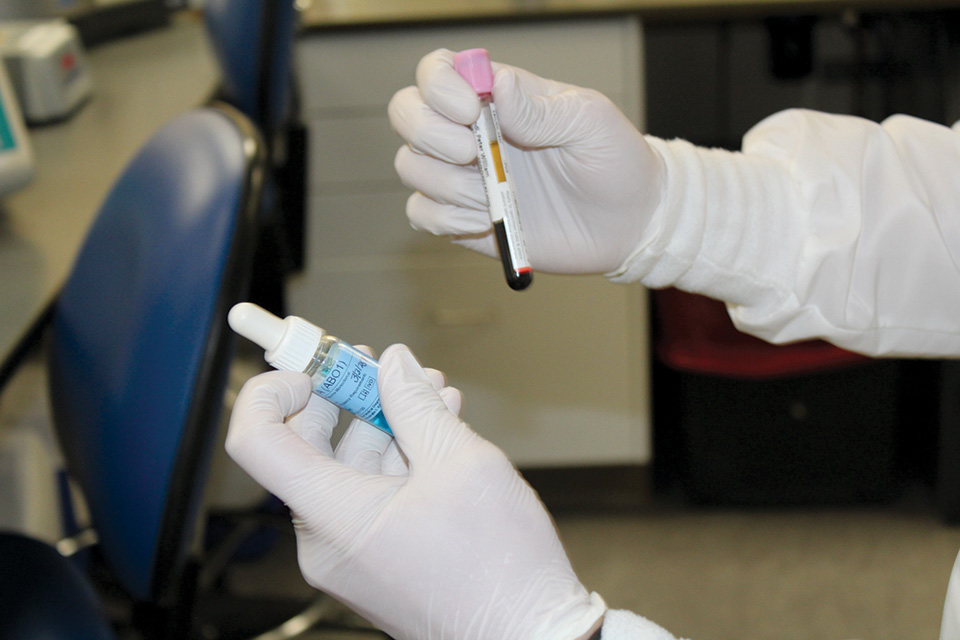
Upon completion of the AAS in laboratory technician, students will be able to:
- Explain and properly apply the scientific method.
- Prepare written and oral scientific communications that use tables, graphs, and sample calculations to report results.
- Critically evaluate contributions to science reported in all forms of media and be able to identify valid approaches to scientific inquiry, problem-solving, and reporting.
- Demonstrate proficiency in basic laboratory skills common to clinical and non-clinical research laboratories.
- Design, perform, and analyze results of experiments using basic molecular biology methodologies and recombinant DNA techniques.
- Break down, clean, set-up, and run contemporary laboratory instrumentation.
- Apply the fundamentals of molecular biology theories, methodologies, and techniques.
Apply Geographic Information System (GIS) skills to topographical data to identify problems, monitor environmental changes, carry out forecasting, identify trends, and prioritize workloads.